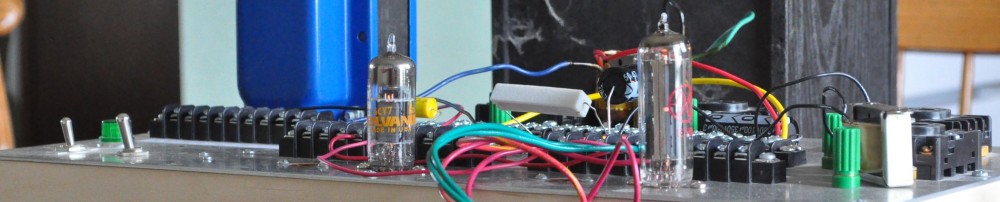
Functionality is Where You Find It

After you’ve been building audio gear for a while you begin to acquire all sorts of miscellaneous test equipment and I am no exception. So today I was looking at a couple of audio function generators that I use to test amps and preamps. One is a relatively modern Tenma 72-455 and the other an older vacuum tube unit; a Precision model E-310. Neither of these units have been calibrated in all the time that I’ve owned them except for some rough checks involving a speaker and a tuning fork. So today I began thinking about calibration. Continue reading

How Much Audio Bandwidth?

There is an ongoing debate in audio circles about just how much frequency response is really required from an audio system. Different systems for different uses may have vastly different requirements. The audio response required for a media room amplifier where various sound effects, explosions, noises, as such must be accurately reproduced may be far different that that required for orchestral music or jazz listening in a study or living room. So the pertinent question becomes, “For what conditions do we design?”. Continue reading

Why Tubes?

So I get the question all the time “Why tubes?”. I usually answer something along the lines of “I just like them” but that really doesn’t sum it up that well. So I have been thinking about that very question; “Why tubes?”. After much contemplation, I think I have come up with one simple answer that sums up my feelings on the topic quite succinctly:

Why tubes?

Because vacuum tubes are like MOSFETs, but with class!

Carbon Vs. Metal

So whenever you go out to an audio equipment forum on the web, inevitability the topic of discussion will turn to resistors. This is especially true on vacuum tube audio forums. And the discussion always seems to come down to two entrenched camps; the Carbon Composition guys and the Metal Film guys. The Carbon Composition guys always claim that metal film resistors make equipment sound “sterile”, “dry”, or “cold”. The Metal Film guys counter with the fact that carbon composition resistors are noisy producing “hiss”, “pops”, “ticks”, or just “white noise”. And then the fight is on. Continue reading